Escuela Ayurveda by Gaiatri

  • LOGIN
  • Inicio
  • Cursos
    • Curso Inicial de Ayurveda
    • Curso de Masaje Ayurvédico Abhyanga
    • Formación en Terapia de Puntos Marma
    • Formación en Diagnóstico de pulso – Nadi Pariksha
  • Escuela
    • Metodología
    • Certificación
    • Nosotros
    • Testimonios
    • Alumnos
  • Blog
    • Artículos para estudiantes
    • Plantas medicinales
    • Recetas
    • Investigaciones
  • Contacto
Escuela Ayurveda by Gaiatri · Blog de estudiantes

Nutrición materna cotidiana desde Ayurveda: calidez, regularidad y apoyo

El cuidado materno requiere alimento suficiente, descanso posible y redes de apoyo. Ayurveda destaca preparaciones cálidas y fáciles de digerir, adaptadas al embarazo o posparto.

El cuidado materno requiere alimento suficiente, descanso posible y redes de apoyo. Ayurveda destaca preparaciones cálidas y fáciles de digerir, adaptadas al embarazo o posparto.

Idea esencial

Las necesidades cambian según etapa, lactancia, anemia, náuseas y recuperación. Los alimentos tradicionales pueden acompañar, pero no reemplazan controles ni suplementos indicados.

In Liberia, USAID is teaching women about nutrition and health for their children. The women learn which healthy foods to prepare for their children; how to avoid malaria; how, when and where to wash hands; when they should go to the nearest health clinic or hospital; how and when to use Oral Rehydration Salts to stop diarrhea, and other important health tips. Mothers with malnourished children and those that have children from 6-36 months attend the weekly sessions.
Imagen: USAID Africa Bureau / Wikimedia Commons · Public domain.

Qué significa dentro del Ayurveda

Las necesidades cambian según etapa, lactancia, anemia, náuseas y recuperación. Los alimentos tradicionales pueden acompañar, pero no reemplazan controles ni suplementos indicados.

El Ayurveda no interpreta este tema mediante una única regla. Observa cualidades como calor y frío, sequedad y untuosidad, ligereza y pesadez, estabilidad y movimiento. También considera prakṛti, el estado actual o vikṛti, la estación, la edad, la fuerza digestiva y el contexto cotidiano.

Profundización desde la biblioteca de la Escuela

Durante embarazo y posparto, la idea de calidez y regularidad puede traducirse en comidas tolerables, hidratación y apoyo cotidiano, pero las necesidades cambian por trimestre y condición clínica. No se indican hierbas, ayunos ni prácticas depurativas por cuenta propia. La seguridad materna y fetal y las recomendaciones obstétricas tienen prioridad.

Cómo razona el Ayurveda este tema

La enseñanza de la Escuela parte de una idea central: una misma práctica puede producir resultados diferentes según prakṛti —la constitución— y vikṛti —el estado actual—. A esto se suman edad, estación, clima, fuerza, hábitos y agni, la capacidad de transformar alimentos y experiencias. Por eso el criterio ayurvédico no consiste en aplicar una etiqueta de dosha, sino en observar qué cualidades están aumentadas y qué ajuste moderado puede compensarlas.

También se considera ama, concepto tradicional relacionado con transformación incompleta y acumulación. No debe traducirse automáticamente como una toxina medible ni usarse para explicar cualquier síntoma. En términos prácticos orienta a observar pesadez, digestión irregular, lengua cargada, falta de claridad y eliminación deficiente, siempre diferenciando estas observaciones de un diagnóstico médico.

Un método de observación en cuatro pasos

  1. Definir la pregunta: elegir un efecto concreto para observar, como sueño, apetito, energía o digestión.
  2. Registrar el contexto: anotar horario, cantidad, clima, estado previo y otras variables relevantes.
  3. Introducir un cambio moderado: mantenerlo durante un período razonable sin modificar muchas cosas a la vez.
  4. Evaluar y decidir: continuar, ajustar o suspender según la respuesta; consultar si aparecen signos intensos o persistentes.

Cómo llevarlo a la vida cotidiana

Organizar comidas simples, proteína, fibra y líquidos; aceptar ayuda práctica; vigilar señales de alarma y salud mental. Evitar preparados herbales no evaluados durante embarazo y lactancia.

  1. Empezá por observar: registrá durante algunos días qué sucede antes y después de la práctica.
  2. Cambiá una sola variable: horario, cantidad, temperatura o frecuencia, sin modificar todo al mismo tiempo.
  3. Elegí una versión moderada: la intensidad no vuelve más ayurvédica una práctica.
  4. Revisá la respuesta: evaluá digestión, energía, sueño, piel, ánimo y eliminación.

Qué conviene observar

  • Si la práctica aporta claridad o genera pesadez, irritación o inquietud.
  • Si el efecto cambia según el horario, la estación o la cantidad.
  • Si existe hambre real, buena digestión y recuperación adecuada.
  • Si aparecen síntomas nuevos, persistentes o intensos.
  • Si la recomendación es compatible con diagnósticos y tratamientos existentes.

Errores frecuentes

  • Convertir una orientación tradicional en una regla universal.
  • Elegir prácticas solamente por el dosha constitucional.
  • Confundir una sensación subjetiva con un diagnóstico.
  • Usar términos como “detox”, “hormonal” o “inmunidad” como promesas de tratamiento.
  • Sostener una práctica que produce malestar porque se supone que “debe funcionar”.

Preguntas frecuentes

¿Es adecuado para todas las personas?

No necesariamente. La tolerancia depende de salud, edad, medicación, embarazo, clima, digestión y hábitos. La individualización es parte central del enfoque ayurvédico.

¿Cuánto tiempo hace falta para evaluar un cambio?

Los efectos inmediatos pueden orientar, pero conviene observar varios días sin ignorar reacciones adversas. Si hay dolor, mareo, irritación, empeoramiento o síntomas persistentes, se suspende y se consulta.

¿Reemplaza una consulta profesional?

No. Este material ayuda a comprender un marco tradicional y organizar preguntas. No confirma enfermedades ni sustituye diagnóstico, tratamiento o seguimiento.

Precauciones y criterio profesional

Embarazo, lactancia, infancia, enfermedades crónicas, alergias, trastornos alimentarios y uso de medicación requieren especial prudencia. Las prácticas tradicionales pueden complementar el autocuidado, pero no deben retrasar una consulta ni modificar tratamientos indicados.

Seguí profundizando

Continuá estudiando Ayurveda

Encontrá más contenidos para estudiantes o comenzá un recorrido guiado por los fundamentos y la aplicación cotidiana del Ayurveda.

Ver más artículos
Conocer el curso introductorio

Fuente y créditos

Adaptación editorial original en español basada en Ask Ayurveda: consultar el artículo fuente.

Imagen: USAID Africa Bureau / fuente y licencia · Public domain.

Esta ampliación integra criterios de los manuales de la biblioteca académica de Gaiatri Ayurveda: Manual CIA 2026 — Módulo 1: Fundamentos filosóficos y metafísica del Ayurveda; Manual CIA 2026 — Módulo 3: Agni, ama, malas y factores externos de desequilibrio; Gaiatri — Anatomía y fisiología Ayurveda; y Manual de Talleres y Terapias Corporales de Gaiatri Ayurveda.

Contenido educativo. No constituye diagnóstico ni indicación terapéutica individual.

Volver a artículos
  • Home
  • Artículos para estudiantes
  • Nutrición materna cotidiana desde Ayurveda: calidez, regularidad y apoyo
20/09/2026

Nutrición materna cotidiana desde Ayurveda: calidez, regularidad y apoyo

by / sábado, 29 agosto 2026 / Published in Artículos para estudiantes
In Liberia, USAID is teaching women about nutrition and health for their children. The women learn which healthy foods to prepare for their children; how to avoid malaria; how, when and where to wash hands; when they should go to the nearest health clinic or hospital; how and when to use Oral Rehydration Salts to stop diarrhea, and other important health tips. Mothers with malnourished children and those that have children from 6-36 months attend the weekly sessions.
  • Tweet

About

What you can read next

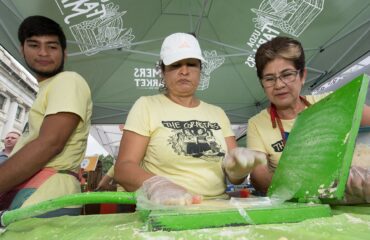
Tortilla making is a skill when failures can become a success at the U.S. Department of Agriculture (USDA) Farmers Market in Washington, D.C., on August 6, 2018. Today’s featured produce is watermelon. National and State Watermelon Queens are here to help people learn about watermelon and taste their samples of red, orange and yellow varieties. The watermelon association queens are represented by 2018 National Watermelon Queen Savannah Lee Christensen (orange jumpsuit), along with state-level queens Gabrielle Hastings for Mar-Del (Maryland-Delaware, yellow blouse), Savannah Hartley (black dress) for Georgia, Emily Rice Dicks (fuchsia dress) for South Carolina, and Camri Campbell (striped dress) for Florida. Seed spitting contests allowed people to try besting the 21-foot distance set by one of the queens. Watermelon eating contests demonstrated how fast some people can enjoy the watery fruit. Many of the featured fruit activities were held at the USDA Farmers Market's VegU educational tent; the ‘VegU' tent allows ‘VegUcators’ to provide tasting samples of the featured produce. The goal is to increase fruits and vegetables in meals and help the customers understand what is in season. Today’s producers are local farms, and vendors include locally sourced ingredients. Live music was provided by “emma G” for shoppers enjoying their meals and resting at shaded table seating areas in the market and the nearby garden. The garden allowed visitors to see bees, bumble bees, and monarch butterflies busy harvesting nectar and pollen from pollinator garden plots. USDA Photo by Lance Cheung. www.usda.gov @USDA_AMS USDAFarmersMkt www.usda.gov/farmersmarket Watermelon: • The Cucurbitaceae is an important food plant family and includes cucumber, gherkins, melons, gourds, marrows, squashes, and pumpkins. The fruit, which is botanically called a ‘pepo’ is used as a vegetable or dessert, but other parts of the plant (young leaves, shoots, seeds, and root) may also be consumed as food. The fruit contains a large amount of water and a reasonable amount of vitamin C. Cucurbits are usually climbing plants. • The classification of melons (Cucumis melo) is based on fruit characteristics (surface and flesh) but, because of hybridization, it is not always easy to distinguish between the groups. There are three main cultivar groups of melon: (1) musk melons are distinctly netted, with a raised network on the surface of the skin generally lighter than the overall color of the fruit such as ‘Galia’ melons; (2) cantaloupe melons have a warty or scaly skin but are not netted; (3) winter melons are either smooth or shallowly corrugated but not netted like the popular ‘Honey Dew’ melons. • The scientific name for watermelon is Citrullus lanatus.
Plato ayurvédico de invierno: calor, color y variedad sin rigidez
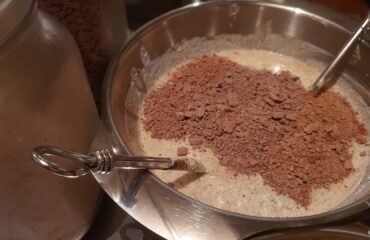
Homemade Yogurt in a stainless steel bowl for family sharing mixed with Cacao mass flakes and powdered fruit mix. The cacao mass was previously liquid before processed into flakes.
Comer yogur según Ayurveda: cantidad, horario y tolerancia individual
Dr. Kitchlu Public Sen. Sec. School is an English Medium Co-educational institution affiliated to Central Board of Secondary Education, Delhi. The school being named after an eminent freedom fighter Dr. Saif Ud Din Kitchlu was founded by Late Sh. Baldev Krishan Ji and is presently Nurtured by Chairman Mr. Sunil Garg (Advocate) who is a constant beacon and source of strength. Since its very foundation in 1989 the school has churned out many eminent personalities and intelligentsias. Over the years it has become a significant portal of learning and growth of young mind. The school provides conducive environment and best opportunities for students to excel in Academics, Sports and Cultural arena besides ensuring discipline, secularism, human values and life skills. Greater emphasis is laid on developing good communication skills in English since majority of children hail from non – English speaking back ground. In this competitive world the school prepares the students for the world of tomorrow. Many students have successfully made for admissions in prestigious institutions after clearing CBSE NEET, PMT,JEE Mains and JEE Advanced with top ranks besides securing top positions at district as well as state level. The school has a magnificent building in serene location of the town equipped with state of the art infrastructure. The Kindergarten and lecture hall are air-conditioned of senior secondary classes. There is the provision of lift and ramp to access all the floors easily. There are spacious labs each for Physics, Chemistry, Biology, Maths, Music and Fine Arts. The smart classes are enabling the students to understand the complex topics in an easy way. Besides, there are facilities of splash pool, Gymnasium, yoga classes, Dance, Stand Pit, Cafeteria, Indoor Assembly(Atrium), Activity Halls for Kindergarten and school transport to near and far places.
Envejecer con vitalidad: una mirada ayurvédica realista sobre rasayana
TOP
WhatsApp
Hola!
Te damos la bienvenida a Escuela Ayurveda by Gaiatri
Cómo puedo ayudarte?
Open Chat
Powered by Joinchat

Escuela Ayurveda
by Gaiatri

Formaciones, cursos y recursos para integrar la sabiduría ancestral del Ayurveda.

Instagram Facebook YouTube WhatsApp

Accesos

Inicio Cursos Metodología Certificación Alumnos Nosotros Contacto

Contacto

info@escuelaayurveda.org.ar WhatsApp: +54 9 11 2459-4376 Campus virtual

© 2026 Escuela Ayurveda by Gaiatri. Todos los derechos reservados.

Acceso exclusivo

¿Ya sos alumno de la escuela?

Ingresá al campus virtual para acceder a tus clases, grabaciones, manuales, actividades y materiales de estudio. También podés visitar el área de alumnos si necesitás orientación o ayuda para ingresar.

Ingresar al campus Área de alumnos
Escuela Ayurveda by Gaiatri

Descubrí sabiduría ancestral

Cursos y formaciones para estudiar Ayurveda con claridad, práctica y acompañamiento docente, e integrar sus principios a la vida personal, profesional o terapéutica.

Unidad educativa de Gaiatri Ayurveda .

Escuela

  • Inicio
  • Cursos y formaciones
  • Metodología
  • Certificación
  • Nosotros
  • Testimonios

Recursos

  • Blog de Ayurveda
  • Artículos para estudiantes
  • Plantas medicinales
  • Recetas ayurvédicas
  • Área de alumnos
  • Gaiatri Ayurveda

Contacto

Correo electrónico info@escuelaayurveda.org.ar
WhatsApp +54 9 11 2459-4376 Consultas e inscripciones
Sede presencial Av. Córdoba y Fitz Roy Palermo, Ciudad de Buenos Aires
Ir a contacto

© 2026 Escuela Ayurveda by Gaiatri. Todos los derechos reservados.

Inicio Formaciones Alumnos Contacto