Escuela Ayurveda by Gaiatri

  • LOGIN
  • Inicio
  • Cursos
    • Curso Inicial de Ayurveda
    • Curso de Masaje Ayurvédico Abhyanga
    • Formación en Terapia de Puntos Marma
    • Formación en Diagnóstico de pulso – Nadi Pariksha
  • Escuela
    • Metodología
    • Certificación
    • Nosotros
    • Cuerpo docente
    • Testimonios
    • Campus Virtual
    • Alumni
  • Blog
    • Artículos para estudiantes
    • Plantas medicinales
    • Recetas
    • Investigaciones
  • Contacto
Escuela Ayurveda by Gaiatri · Blog de estudiantes

Ayurveda espiritual y ocaso histórico: conocimiento, propósito y salud integral

Una lectura del ocaso histórico del Ayurveda y su dimensión espiritual según Tirtha: transmisión del conocimiento, propósito, vínculos y salud integral.

El Ayurveda espiritual propone que la salud no se limita al funcionamiento del cuerpo. Incluye también la claridad mental, el sentido de propósito, la calidad de los vínculos y la relación consciente con la vida. Esta mirada atraviesa el fragmento del manual de Swami Sada Shiva Tirtha compartido como fuente para este artículo.

El mismo texto presenta un contraste histórico: después de un largo período de desarrollo, el Ayurveda atravesó etapas de pérdida institucional, persecución y fragmentación. Sin embargo, parte del conocimiento continuó circulando mediante la enseñanza directa y volvió a organizarse en instituciones educativas durante el siglo XX.

En este artículo analizaremos ese ocaso histórico del Ayurveda y la dimensión espiritual que Tirtha considera inseparable de su propósito. Lo haremos con una lectura pedagógica y crítica: distinguiendo la perspectiva del autor de los datos históricos y evitando convertir una visión tradicional en afirmaciones médicas absolutas.


¿Qué significa hablar del “ocaso” del Ayurveda?

La palabra ocaso no indica que el Ayurveda haya desaparecido por completo. Describe mejor una pérdida de continuidad institucional: centros de estudio destruidos o clausurados, textos dispersos, restricciones políticas y una transmisión que debió sostenerse fuera de los espacios públicos de enseñanza.

Tirtha vincula este proceso con sucesivas conquistas extranjeras y con la destrucción de instituciones educativas del subcontinente indio. Menciona especialmente a Nalanda, un célebre centro de aprendizaje de la India antigua y medieval, y señala que el conocimiento ayurvédico sobrevivió en parte gracias a comunidades que continuaron practicándolo de manera reservada.

Esta explicación debe leerse como una síntesis interpretativa del autor, no como una cronología exhaustiva. La historia del Ayurveda es extensa, regionalmente diversa y atravesada por cambios políticos, lingüísticos, religiosos y educativos. No hubo un único momento de caída ni una sola causa.

Manuscritos y materiales de estudio ayurvédico iluminados por la luz del ocaso
El ocaso histórico del Ayurveda puede comprenderse como una pérdida de instituciones y acceso público, no como la desaparición total de su conocimiento.

La transmisión maestro-discípulo como forma de preservación

Ante la fragilidad de las instituciones, el manual destaca la relación guru-shishya, es decir, la transmisión entre maestro y discípulo. En este modelo, aprender no consiste solamente en leer un texto: implica observar, practicar, preguntar, recibir correcciones y asumir una responsabilidad ética frente al conocimiento.

La oralidad permitió conservar saberes cuando los libros y las escuelas no estaban seguros. También dio lugar a variaciones entre linajes, regiones y familias de practicantes. Esta diversidad explica por qué el Ayurveda actual conserva principios comunes y, al mismo tiempo, múltiples modos de enseñanza y aplicación.

Docente y estudiante observando plantas y materiales de estudio ayurvédico
La enseñanza directa integra conceptos, observación, práctica y criterio; no se reduce a memorizar fórmulas.

Preservar una tradición no significa repetirla sin cambios. Significa comprender sus fundamentos, reconocer su contexto y transmitirla con responsabilidad.

El resurgimiento moderno y el desafío de integrar

El fragmento sitúa un punto de reorganización durante las primeras décadas del siglo XX, cuando el Ayurveda recuperó reconocimiento institucional en India y volvieron a consolidarse escuelas y universidades. Desde entonces, su enseñanza se expandió dentro y fuera del país.

Para Tirtha, este renacimiento no exige rechazar la medicina moderna. Su planteo es integrador: diferentes sistemas pueden aportar herramientas distintas siempre que no pierdan de vista la persona completa. Hoy esa integración requiere además investigación rigurosa, límites profesionales claros y respeto por la evidencia disponible.

  • Tradición: aporta un marco coherente sobre hábitos, constitución, entorno y prevención.
  • Medicina contemporánea: ofrece diagnóstico, tecnología, investigación clínica y tratamientos indispensables.
  • Práctica responsable: reconoce qué puede acompañarse desde Ayurveda y qué necesita evaluación o tratamiento sanitario.

¿Qué es el Ayurveda espiritual según Tirtha?

En el manual, la expresión Ayurveda espiritual no designa una técnica aislada ni una rama separada. Describe una orientación general: la medicina alcanza mayor profundidad cuando considera que la persona posee una vida interior, valores, vínculos y un propósito que influyen en su experiencia de salud.

El autor utiliza el lenguaje del “Yo interior” o del alma. Ese vocabulario pertenece a su marco filosófico y puede comprenderse de distintas maneras. Una persona religiosa podrá relacionarlo con lo divino; otra puede traducirlo como conciencia, sentido, interioridad o capacidad de vivir de acuerdo con valores profundos.

Lo central no es imponer una creencia. Es reconocer que la experiencia humana incluye preguntas que no se resuelven únicamente mediante parámetros físicos: ¿para qué vivo?, ¿qué clase de trabajo expresa mis capacidades?, ¿cómo cultivo vínculos justos?, ¿qué relación mantengo con la naturaleza y con la comunidad?

Las cuatro dimensiones de la salud

Tirtha ordena la salud en cuatro áreas relacionadas. No son compartimentos independientes: el desequilibrio en una puede repercutir sobre las demás.

DimensiónQué incluyePregunta para observarla
Cuerpo y menteVitalidad, descanso, digestión, estabilidad emocional y capacidad de actuar.¿Mi ritmo cotidiano sostiene o agota mis recursos?
Trabajo y propósitoUso de capacidades, sentido de contribución y coherencia entre tarea y valores.¿Encuentro algún significado en lo que hago?
RelacionesVínculos afectivos, ética, reciprocidad, comunidad y responsabilidad social.¿Mis relaciones permiten cuidado, límites y crecimiento?
Desarrollo interiorAutoconocimiento, reflexión, práctica espiritual o contemplativa y conexión con la vida.¿Tengo espacios para escuchar y ordenar mi mundo interior?

Este mapa amplía la observación, pero no debe usarse para culpabilizar. Tener un trabajo difícil, atravesar un conflicto o sentirse desconectado no significa haber causado una enfermedad. Son dimensiones que pueden influir en el bienestar y que merecen atención, no diagnósticos automáticos.

Propósito, trabajo y salud: un matiz necesario

El manual sostiene que un trabajo con sentido puede fortalecer la salud, mientras que una ocupación vivida como vacía o forzada puede generar sufrimiento. Esta relación resulta comprensible: el estrés laboral crónico, la falta de autonomía y la inseguridad económica afectan el descanso, el ánimo y los hábitos.

Sin embargo, no corresponde afirmar que la falta de propósito sea la causa directa de enfermedades como el cáncer. Esa asociación aparece en el texto fuente como interpretación espiritual, pero no debe trasladarse a una explicación biomédica. Las enfermedades complejas tienen múltiples factores y requieren evaluación profesional.

Una lectura responsable

Explorar el propósito puede acompañar procesos de bienestar, rehabilitación o cambio de hábitos. No reemplaza estudios, diagnóstico, psicoterapia, medicación ni tratamientos indicados.

Relaciones, comunidad e interdependencia

Otra idea central del Ayurveda espiritual es la interdependencia. La salud individual no está aislada de la familia, la comunidad, las condiciones sociales ni el ambiente. Tirtha extiende esta reflexión hacia el trato justo, la integración de las personas mayores y una economía que respete la dignidad humana.

Esta mirada evita reducir el bienestar a una rutina privada de autocuidado. Dormir, comer y respirar mejor son importantes, pero también lo son recibir apoyo, participar de vínculos seguros, disponer de tiempo, acceder a atención sanitaria y vivir en un ambiente saludable.

Persona caminando en un entorno natural al amanecer como imagen de propósito y relación con la vida
La dimensión espiritual puede expresarse como una relación más consciente con uno mismo, con otras personas y con el ambiente.

Cómo llevar esta mirada a la vida cotidiana

La espiritualidad, presentada con sobriedad, no necesita comenzar con grandes definiciones. Puede traducirse en pequeñas prácticas de observación y coherencia.

  1. Revisá tu ritmo: observá qué actividades te dejan claridad y cuáles sostienen una agitación permanente.
  2. Nombrá lo valioso: elegí dos o tres valores que quieras expresar en decisiones concretas.
  3. Buscá propósito posible: no todo trabajo será ideal, pero puede haber una capacidad, un vínculo o una contribución que merezca cultivarse.
  4. Cuidá la reciprocidad: preguntate si tus relaciones permiten dar, recibir, poner límites y pedir ayuda.
  5. Reservá un espacio interior: escritura, silencio, contemplación, oración o contacto con la naturaleza pueden ayudar a reconocer lo que ocurre.
  6. Integrá, no reemplaces: utilizá estas prácticas como acompañamiento y mantené la atención profesional que corresponda.

Preguntas para estudiantes de Ayurveda

  • ¿Qué se pierde cuando el Ayurveda se reduce a una lista de alimentos, plantas o técnicas?
  • ¿Cómo puede enseñarse una tradición espiritual sin imponer creencias?
  • ¿Qué diferencia existe entre acompañar el sentido de vida y explicar una enfermedad por una supuesta falla espiritual?
  • ¿De qué manera la relación maestro-discípulo puede conservar rigor sin desalentar el pensamiento crítico?
  • ¿Cómo dialogan hoy los saberes tradicionales, la investigación y la práctica clínica responsable?

Síntesis: recuperar profundidad sin perder criterio

El ocaso del Ayurveda no fue su desaparición, sino una etapa de pérdida, dispersión y transmisión restringida. Su recuperación moderna permitió volver a estudiarlo institucionalmente y abrió un nuevo desafío: conservar su profundidad sin aislarlo del conocimiento contemporáneo.

La propuesta de Tirtha recuerda que Ayurveda significa “conocimiento de la vida”. Desde esa perspectiva, la salud incluye cuerpo y mente, pero también propósito, vínculos, ética, comunidad y desarrollo interior. El valor de esta visión está en ampliar las preguntas, no en reemplazar diagnósticos ni atribuir enfermedades a una falta de espiritualidad.

¿Querés profundizar en los fundamentos del Ayurveda?

Conocé el Curso Introductorio de Ayurveda o seguí explorando los artículos para estudiantes de la Escuela.

Fuente principal

Tirtha, Swami Sada Shiva. Fragmento del manual compartido para este artículo, páginas 24 a 29: declive histórico del Ayurveda, transmisión del conocimiento, Ayurveda espiritual, salud integral, relaciones, naturaleza y propósito. El artículo presenta una síntesis pedagógica y crítica; no reproduce literalmente el texto.

Volver a artículos
  • Home
  • Artículos para estudiantes
  • Ayurveda espiritual y ocaso histórico: conocimiento, propósito y salud integral
15/11/2026

Ayurveda espiritual y ocaso histórico: conocimiento, propósito y salud integral

by richadmin / domingo, 19 julio 2026 / Published in Artículos para estudiantes
Manuscritos y materiales de estudio ayurvédico iluminados por la luz del ocaso
  • Tweet
Tagged under: ayurveda, Ayurveda espiritual, historia del Ayurveda, propósito, salud integral, Tirtha

About richadmin

What you can read next

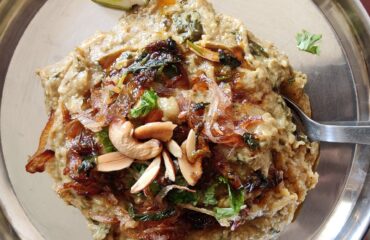
Haleem is Ramzan Special dish. Vegetable Haleem is very healthy, highly protein rich, complete meal, nutritious for all Vegetarians. This is a combination of different lentils, spices, ghee, dry fruits and the taste why it is as mouth watering as the non-veg haleems available in the Ramzan Season. Though making this at home is a very lengthy process, it's worth that effort when it comes to the taste.
Combinaciones de alimentos en Ayurveda: criterios para favorecer la digestión
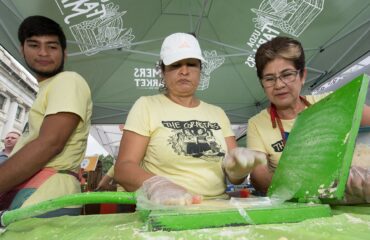
Tortilla making is a skill when failures can become a success at the U.S. Department of Agriculture (USDA) Farmers Market in Washington, D.C., on August 6, 2018. Today’s featured produce is watermelon. National and State Watermelon Queens are here to help people learn about watermelon and taste their samples of red, orange and yellow varieties. The watermelon association queens are represented by 2018 National Watermelon Queen Savannah Lee Christensen (orange jumpsuit), along with state-level queens Gabrielle Hastings for Mar-Del (Maryland-Delaware, yellow blouse), Savannah Hartley (black dress) for Georgia, Emily Rice Dicks (fuchsia dress) for South Carolina, and Camri Campbell (striped dress) for Florida. Seed spitting contests allowed people to try besting the 21-foot distance set by one of the queens. Watermelon eating contests demonstrated how fast some people can enjoy the watery fruit. Many of the featured fruit activities were held at the USDA Farmers Market's VegU educational tent; the ‘VegU' tent allows ‘VegUcators’ to provide tasting samples of the featured produce. The goal is to increase fruits and vegetables in meals and help the customers understand what is in season. Today’s producers are local farms, and vendors include locally sourced ingredients. Live music was provided by “emma G” for shoppers enjoying their meals and resting at shaded table seating areas in the market and the nearby garden. The garden allowed visitors to see bees, bumble bees, and monarch butterflies busy harvesting nectar and pollen from pollinator garden plots. USDA Photo by Lance Cheung. www.usda.gov @USDA_AMS USDAFarmersMkt www.usda.gov/farmersmarket Watermelon: • The Cucurbitaceae is an important food plant family and includes cucumber, gherkins, melons, gourds, marrows, squashes, and pumpkins. The fruit, which is botanically called a ‘pepo’ is used as a vegetable or dessert, but other parts of the plant (young leaves, shoots, seeds, and root) may also be consumed as food. The fruit contains a large amount of water and a reasonable amount of vitamin C. Cucurbits are usually climbing plants. • The classification of melons (Cucumis melo) is based on fruit characteristics (surface and flesh) but, because of hybridization, it is not always easy to distinguish between the groups. There are three main cultivar groups of melon: (1) musk melons are distinctly netted, with a raised network on the surface of the skin generally lighter than the overall color of the fruit such as ‘Galia’ melons; (2) cantaloupe melons have a warty or scaly skin but are not netted; (3) winter melons are either smooth or shallowly corrugated but not netted like the popular ‘Honey Dew’ melons. • The scientific name for watermelon is Citrullus lanatus.
Plato ayurvédico de invierno: calor, color y variedad sin rigidez
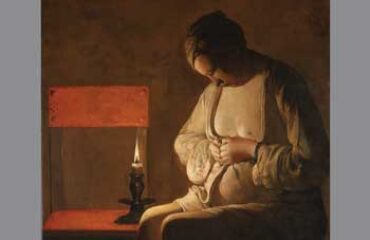
Georges de La Tour (1593‒1652) La Femme à la puce (The Flea Catcher) (1638) Oil on canvas (90 cm × 120 cm) Musée Lorrain, Nancy. Photo P. Mignot “Haughty, sharp-tongued, self-assured, unbearably self-sufficient, stingy, and violent beyond measure,” is how Georges de La Tour was described by his contemporaries. Municipal records confirm that he refused to pay his share to feed the hungry during times of famine. He assaulted an officer, beat a peasant, and made himself obnoxious to everyone by “sending his dogs after hare into the standing crops which they trample down and ruin.” A “painter” is how he described himself in the marriage contract in 1617. Shortly after the wedding, he moved to Lunéville, a prosperous town near Nancy, in Lorraine, now France, where he lived and worked. His early life and training remain otherwise ambiguous. He was influenced by the style of Caravaggio, either from travel to Italy or from contact with the Dutch followers of the Italian master. He found fame and fortune in his lifetime and was known as “Painter to the King.” He had 10 children, three of whom lived to adulthood. His son Étienne studied under him. La Tour died suddenly, possibly of the plague, within a few days of the deaths in his household of his wife and servant. He was soon forgotten to be discovered hundreds of years later and become an icon, anointed among the greats of his generation. The 1630s was a turbulent period for Lorraine, a region contested by France and Germany for centuries. The 30 Years’ War and consequent epidemics, famine, and destruction, compounded by a fire in 1638 that burned Lunéville to the ground, contributed to the loss of much of La Tour’s legacy, as many as 400 works. A few remaining paintings were variously thought to be the work of Ribera, Zurbarán, Murillo, Velázquez, Rembrandt, and always, Caravaggio. Some paintings are still emerging from oblivion. The Flea Catcher, on this month’s cover, was not attributed to him until 1955. In following Caravaggio, La Tour rejected Baroque classicism, the art movement of his age. He abandoned architectural backdrops and complicated scenes for solitary figures in dark tones. But his kinship with the master went beyond the dramatic chiaroscuro. The two shared, along with a troubling inability to cope with ordinary life, an incongruous gift for capturing its poetry on canvas. Well acquainted with darkness in the world, they brought into their paintings light. And though their choice of subjects wandered into the rogue—criminals, thieves, beggars—the light cast an aura of spirituality, driving the mood, the character, and the message. In a departure from Caravaggio, La Tour introduced in his works the actual source of light, usually a candle, and became famous for his religious night scenes, often referred to as nocturnes. In these, he moved away from the traditional halos and wings, injecting an earthy holiness into his figures: Sebastian, patron saint of plague victims, pious women who nursed the wounded, and several versions of penitent Mary Magdalene. Alternating light and dark built mystery and stillness into these scenes, which, stripped of extraneous background, attained an almost geometric simplicity well ahead of the times. The Flea Catcher has been unanimously accepted as the work of La Tour, although initially the subject matter caused confusion. Seventeenth-century art was filled with flea-searching figures painted by European masters. The Dutch often included daily bodily search for parasites in their repertoire, but flea and louse iconography was not part of French art. And although clearly in La Tour’s nighttime style, The Flea Catcher is different from his other works and from Dutch works on this subject. True to genre, the Dutch offerings were playful tongue-in -cheek, even erotic presentations, along the lines of, if not inspired by, poetry from Ovid to John Donne. “Madam, that flea, which crept between your breasts / I envied that there he should make his rest; / The little creature’s fortune was so good / That angels feed not on so precious food.”1 The phase of La Tour’s career during which The Flea Catcher was painted is not known, nor are the circumstances of naming the work. The dating is also approximate. Its execution, whether in the 1630s or 1640s, did coincide with instances of the plague in Lorraine and with troop movements through the region. But the cause of plague was unknown. Flea hunting was a mindless sport intended to provide relief from annoying bites and itching. And, of course, there was the issue of cleanliness. The Dutch were notorious advocates of cleanliness. Gerard ter Borch and others often paid tribute to the dictum “spiritual purity starts with a clean body.” A woman was considered the “moral laundress” of the household and the guardian of proper child care: “Lazy mother, lousy heads.” Although French artists were not under as much pressure as the Dutch to couch moral messages in genre scenes, a moral or spiritual interpretation of La Tour’s woman’s search for fleas is intriguing. Certainly morality is present in the background of other well-known La Tour paintings (The Fortune Teller, The Card Sharp with the Ace of Clubs). In The Flea Catcher, the woman’s focus on the task rivals any Dutch example. And whatever it may have lost from abandoning the lighthearted approaches preceding it, this work made up in silence and intensity. Unlike La Tour’s other work, mostly religious and genre scenes, The Flea Catcher has a complicated, even mysterious, aura. Not so much in its intimacy and introspection, which are found in most all his work, but in the discrepancy between these and the mundane task described. The enigmatic nature of the painting has attracted multiple interpretations. Some observers view the flea crushing as ancillary to the quiet contemplation and sadness implicit in the figure’s posture. Others take a religious approach. They see a fallen woman, possibly expecting a child, a penitent Magdalene pondering the excesses of her past life. Some viewers sense spiritual contemplation, a form of asceticism that comes from introspective concentration on a mundane task. And yet others suggest that the woman is not hunting fleas at all but praying the rosary or inspecting her garment, as the candlelight may be attracting fleas. Whatever the interpretation, the staging is pure La Tour: passive with an air of personal transcendence. In this treatment of flea hunting, the viewer is given privileged access. The setting is sparse, fluid, linear, and intimate. The woman in plain wrap is in a stage of undress, her hair concealed, head downcast, bust and chest pathetically exposed, belly engorged. The hands, frozen in the all too familiar flea-crushing curl, are tightened to trap the undesirable guest between the thumbnails. In a characteristic maneuver, La Tour contrasts the impassive face with active, engaged hands. A smoking flame, the artist’s signature, exudes an otherworldly calm as it exposes red tones in the adjacent chair and settles lightly on the woman’s face. The emphasis here is not on charm but on drama, and the intense introspection implies deeper concerns. Historical and religious references aside, La Tour’s femme à la puce begs for a contemporary interpretation, one informed by current knowledge of fleas, plague, and human frailty relieved by introspection. For as she absently tried to rid her body of fleas, La Tour’s woman became one more human protest against the ubiquitous pests. Whatever the distracting affliction she might have contemplated during her hunt, it would pale in the face of what she did not know about their behavior as vectors of disease. Long a favorite of poets, the flea was an allusion to all sorts of mischief, a kind of literary pet. “If you turn me into anything, let it be in the likeness of a little pretty frisking flea that I might be here and there and everywhere.”2 Far from its reputation during La Tour’s lifetime as a harmless, even amusing insect, the flea has since emerged as enemy of public health, no less from its role in the spread of plague, a most dreaded scourge. Fleas may be some of the most modern insects. Part of their success as vectors comes from their strong, but not absolute, preference for the blood of a good reservoir species (rodents, especially rats globally, prairie dogs and squirrels in the United States), along with a willingness to feed on humans when opportunity and need arise. Fleas that prefer prairie dog blood will feed on and infect a person who wanders through a prairie dog village after a plague-associated prairie dog die off. This less than desirable feed transforms an unrecognized sylvatic cycle into human illness and death. Fleas have demonstrated admirable staying power, causing pandemics, beginning in antiquity, and maintaining to this day a sylvatic cycle that bubbles along with few or no human cases but does not go away. What does La Tour’s downcast woman have to do with modern fleas? She is collateral damage to a natural cycle of infection that engages rodent reservoir hosts and the flea vectors. Whatever her emotional situation, it probably had less to do with her worth as a person than with her status in the world, as misfortune generally does. She is in some way as much a host of her calamity as of the flea between her thumbs.
Aceites capilares según los doshas: cómo elegir sin caer en fórmulas universales
TOP
WhatsApp
Hola!
Te damos la bienvenida a Escuela Ayurveda by Gaiatri
Cómo puedo ayudarte?
Open Chat
Powered by Joinchat

Escuela Ayurveda
by Gaiatri

Formaciones, cursos y recursos para integrar la sabiduría ancestral del Ayurveda.

Instagram Facebook YouTube WhatsApp

Accesos

Inicio Cursos Metodología Certificación Alumnos Nosotros Contacto

Contacto

info@escuelaayurveda.org.ar WhatsApp: +54 9 11 2459-4376 Campus virtual

© 2026 Escuela Ayurveda by Gaiatri. Todos los derechos reservados.

Acceso exclusivo

¿Ya sos alumno de la escuela?

Ingresá al campus virtual para acceder a tus clases, grabaciones, manuales, actividades y materiales de estudio. También podés visitar el área de alumnos si necesitás orientación o ayuda para ingresar.

Ingresar al campus Área de alumnos
Escuela Ayurveda by Gaiatri

Descubrí sabiduría ancestral

Cursos y formaciones para estudiar Ayurveda con claridad, práctica y acompañamiento docente, e integrar sus principios a la vida personal, profesional o terapéutica.

Unidad educativa de Gaiatri Ayurveda .

Escuela

  • Inicio
  • Cursos y formaciones
  • Metodología
  • Certificación
  • Nosotros
  • Testimonios

Recursos

  • Blog de Ayurveda
  • Artículos para estudiantes
  • Plantas medicinales
  • Recetas ayurvédicas
  • Área de alumnos
  • Gaiatri Ayurveda

Contacto

Correo electrónico info@escuelaayurveda.org.ar
WhatsApp +54 9 11 2459-4376 Consultas e inscripciones
Sede presencial Av. Córdoba y Fitz Roy Palermo, Ciudad de Buenos Aires
Ir a contacto

© 2026 Escuela Ayurveda by Gaiatri. Todos los derechos reservados.

Inicio Formaciones Alumnos Contacto